CURRENT PROJECT
Rivana at Innovation Station
- Loudoun County, Virginia
- |
- EB-5 Infrastructure Project with 2% Visa Set-Aside
Rivana at Innovation Station will be a 103-acre, mixed-use development totaling 8.5 million square feet at full build-out. The vision sprang from the site’s remarkable natural features, which will be preserved and enriched within the urban master plan. Rivana weaves sustainable mixed-use architecture and expansive public green spaces into a cohesive and deeply satisfying walking environment, designed for highly productive work, holistic wellness, and rich cultural engagement.
The EB-5 project is a component of the Master Development and consists of the construction and development of public infrastructure for Phase I, including:
- Public roadways and transportation improvements
- Water and sanitary sewer systems
- Public parks, open space, and pedestrian infrastructure
- Public-access parking facilities
- Stormwater management systems
Each infrastructure component within the project will, upon completion, be owned by, conveyed to, or dedicated to Rivana at Innovation Station Community Development Authority (RISCDA), Loudoun County, Virginia, or another governmental entity, and will be operated and maintained as public infrastructure or essential public services.
Project Summary
Location
Route 28 & Dulles Toll Rd, Herndon, VA 20170
Developer
DWC Holdings, LLC
Construction Status
Construction began in May 2025 and is expected to be completed by February 2029 (44 months)
Estimated Jobs at Completion
14+ Total Jobs per Investor
Total Project Cost
$304.9 million
Total EB-5 Capitalization
$79.2M
Investment Required
$800,000
Structure
Secured Debt
Loan Term
5 years for each advance
Why Is Rivana at Innovation Station an Exceptional EB-5 Project?
USCIS-Approved Form I-956F for Infrastructure Project
Rivana at Innovation Station’s Form I-956F has been approved by USCIS. It is administered by a governmental entity that receives EB-5 capital and is responsible for creating jobs through the financing, maintenance, improvement, or construction of public works. As a result, EB-5 investors in this project will have access to the 2% of visas reserved for infrastructure projects. Rivana is being developed through agreements among three main parties: the Rivana at Innovation Station Community Development Authority (RISCDA); Loudoun County, Virginia; and DWC Holdings LLC. RISCDA is a government-related entity established to finance and support the project. In coordination with the Economic Development Authority of Loudoun County, it will manage and oversee development.
Serving National Security Interests
Northern Virginia’s defense and intelligence community faces a critical shortage of modern, purpose-built sensitive compartmented information facilities (SCIFs). Updated federal standards are creating urgent, measurable demand for new-construction SCIF space that can be designed from the ground up to meet updated specifications. Rivana’s direct adjacency to the Innovation Center Metro station, combined with $340 million in TIF bond infrastructure support and full entitlement approvals, positions the project as a rare greenfield opportunity. The project has already attracted interest from four major prospective tenants with significant classified program requirements: NASA, Booz Allen Hamilton’s government contracts division, Peraton, and Loudoun County Government. This is not simply a real estate investment. It is infrastructure designed to support the US national interest and the intelligence sector.
Prime Location in a Leading Technology Hub
Loudoun County, located in Northern Virginia within the Washington metropolitan area and approximately 25 miles from the White House, is, alongside neighboring Fairfax County, one of the most important economic and technology hubs in the United States. Known as “Data Center Alley,” it holds the world’s largest concentration of data centers, including major infrastructure for Amazon Web Services, supporting a significant share of global internet traffic. With over 12,500 businesses and a strong workforce, the region offers a solid foundation for long-term growth. A new transit-oriented, mixed-use district at Loudoun County’s eastern gateway is expected to generate lasting economic and cultural benefits.
Experienced Team
DWC Holdings, LLC, serves as the project company and is managed by Origami Capital Partners. Founded in 2008, Origami manages approximately $1.3 billion in assets and specializes in structured and flexible investment solutions. The firm brings extensive experience across multiple sectors, including real estate, credit, technology, and financial services, with a strong track record of addressing complex capital and liquidity needs.
Image Gallery
Request More Details
Other Past Projects
Four Seasons Hotel & Private Residences
Past EB-5 Projects
The legendary private Miami club has been reinvented by the Four Seasons brand. As a High-Unemployment Area (HUA) EB-5 project in a targeted employment area, it offers EB-5 investors a premier EB-5 hotel project with access to one of the world’s most recognized luxury hospitality brands.
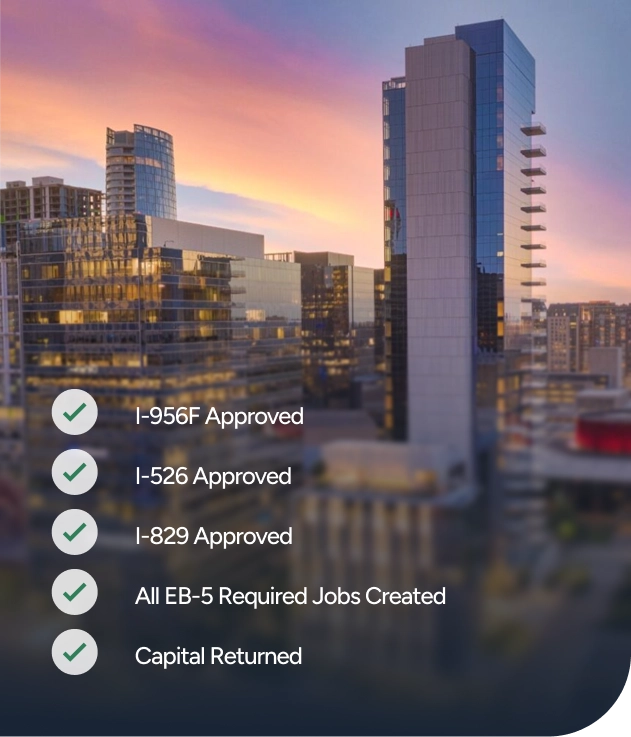
HALL Arts Residences and Hotel
Past EB-5 Projects
Located in Dallas, HALL Arts Residences and Hotel is the second phase of a three-phase, mixed-use EB-5 real estate project led by HALL Group. Situated in a targeted employment area, this High-Unemployment Area (HUA) EB-5 project offers EB-5 investors a stake in one of Dallas’s most celebrated arts and culture developments.
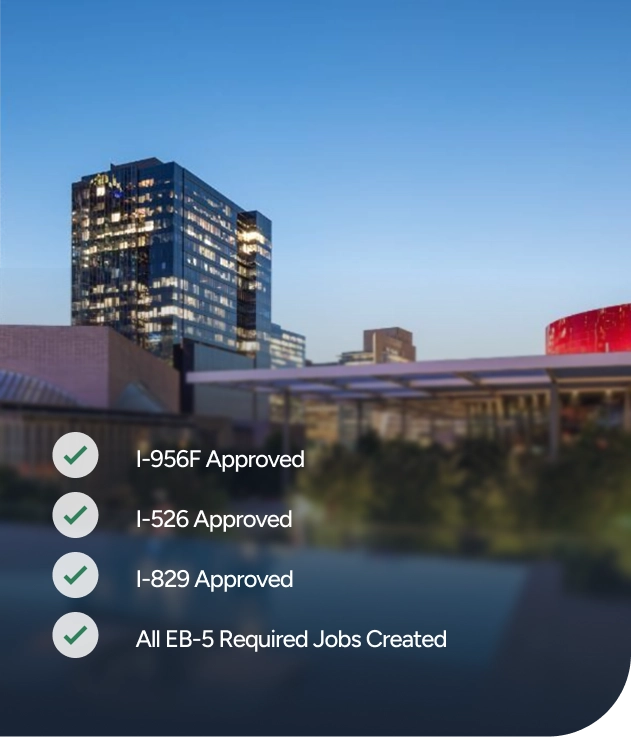
HALL Arts Residences II
Past EB-5 Projects
Located in Dallas, HALL Arts Residences II is the third phase of a three-phase, mixed-use EB-5 real estate project led by HALL Group. As a High-Unemployment Area (HUA) EB-5 project in a targeted employment area, it continues the award-winning development’s legacy in the heart of the Dallas Arts District.
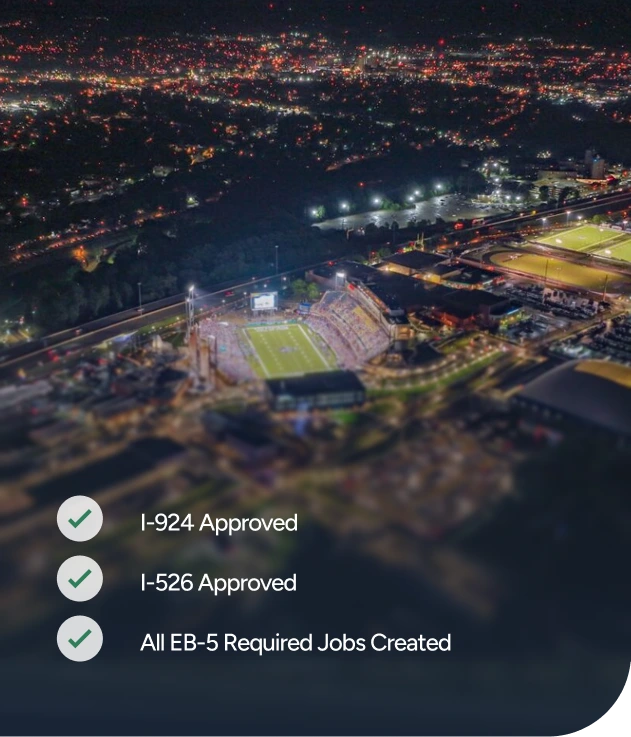
Hall of Fame Village
Past EB-5 Projects
The Hall of Fame Resort and Entertainment Company is an iconic High-Unemployment Area (HUA) EB-5 project at the heart of American football. Located in a targeted employment area, it gives EB-5 investors a rare opportunity to participate in one of America’s most recognized cultural landmarks.
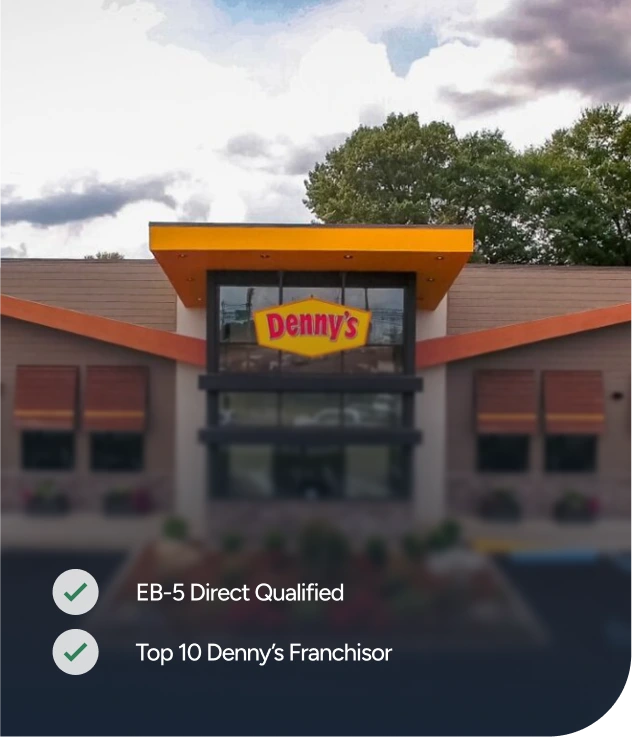
Denny’s
Past EB-5 Projects
Established in 1953, Denny’s has been publicly traded (Nasdaq: DENN) since 1968, the same year it opened its 1,000th store in the US. As an EB-5 direct investment project, it stands out as one of the most distinctive EB-5 compliant investments available, backed by a nationally proven brand.
Legacy Hotel & Residences
Past EB-5 Projects
This High-Unemployment Area (HUA) EB-5 hotel project, located within the Miami Worldcenter, is a luxury hotel and residential tower in a targeted employment area. It features micro-luxe residences with no rental restrictions, a medical and wellness center, and the largest downtown hotel pool deck in Miami — an exceptional opportunity for EB-5 investors on their path to US Permanent Residency.
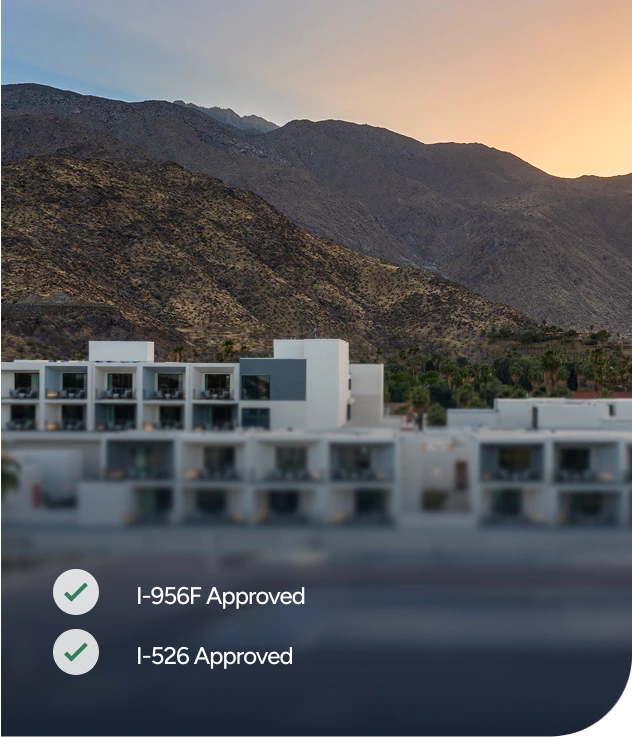
Thompson Palm Springs Hotel
Past EB-5 Projects
A full-service luxury resort and High-Unemployment Area (HUA) EB-5 hotel project featuring 36,800 sq. ft. of upscale boutique and restaurant retail space in Palm Springs. Situated in a targeted employment area, it offers EB-5 investors a compelling investment in California’s thriving hospitality market.
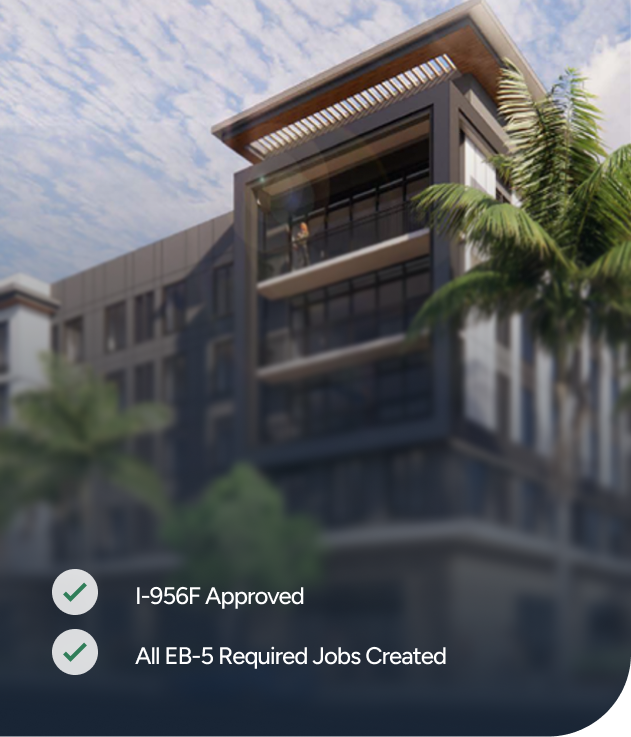
AC by Marriott & Element by Westin Hotel
Past EB-5 Projects
This co-branded High-Unemployment Area (HUA) EB-5 hotel project in Las Vegas, Nevada, features two distinct hotels under one roof. Located in a targeted employment area, it offers a mix of hotel rooms and extended-stay suites — a strong EB-5 compliant investment in one of the world’s top hospitality markets.
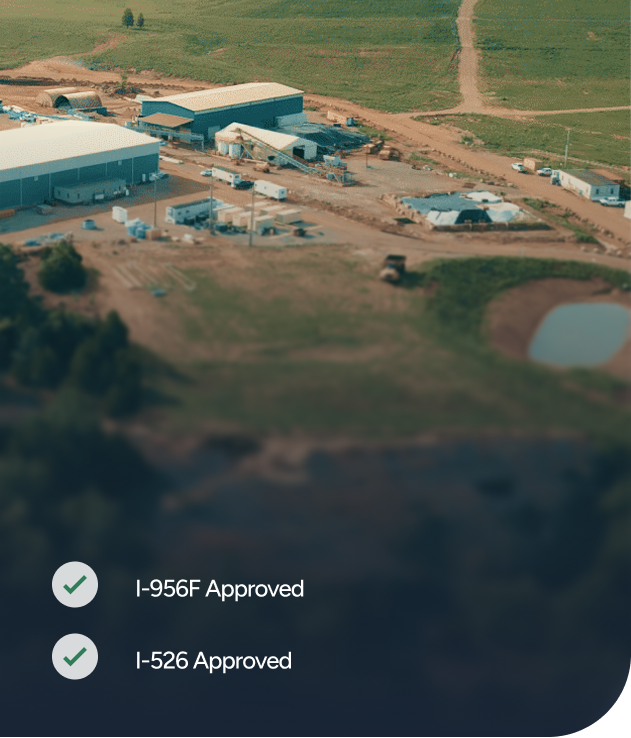
US Strategic Metals
Past EB-5 Projects
Founded to address the nation’s need for critical mineral independence, USSM is building a critical minerals refinery in rural Missouri. As an EB-5 rural project with priority processing, it gives EB-5 investors access to rural set-aside visas and an expedited path to US Permanent Residency. This EB-5 infrastructure project will process critical minerals such as cobalt and nickel to support the domestic supply of electric vehicle batteries, consumer electronics, and defense technologies, enhancing the economic and national security of the United States.
Four Seasons Hotel & Private Residences
Past EB-5 Projects
The legendary private Miami club has been reinvented by the Four Seasons brand. As a High-Unemployment Area (HUA) EB-5 project in a targeted employment area, it offers EB-5 investors a premier EB-5 hotel project with access to one of the world’s most recognized luxury hospitality brands.
HALL Arts Residences and Hotel
Past EB-5 Projects
Located in Dallas, HALL Arts Residences and Hotel is the second phase of a three-phase, mixed-use EB-5 real estate project led by HALL Group. Situated in a targeted employment area, this High-Unemployment Area (HUA) EB-5 project offers EB-5 investors a stake in one of Dallas’s most celebrated arts and culture developments.
HALL Arts Residences II
Past EB-5 Projects
Located in Dallas, HALL Arts Residences II is the third phase of a three-phase, mixed-use EB-5 real estate project led by HALL Group. As a High-Unemployment Area (HUA) EB-5 project in a targeted employment area, it continues the award-winning development’s legacy in the heart of the Dallas Arts District.
Hall of Fame Village
Past EB-5 Projects
The Hall of Fame Resort and Entertainment Company is an iconic High-Unemployment Area (HUA) EB-5 project at the heart of American football. Located in a targeted employment area, it gives EB-5 investors a rare opportunity to participate in one of America’s most recognized cultural landmarks.
Denny’s
Past EB-5 Projects
Established in 1953, Denny’s has been publicly traded (Nasdaq: DENN) since 1968, the same year it opened its 1,000th store in the US. As an EB-5 direct investment project, it stands out as one of the most distinctive EB-5 compliant investments available, backed by a nationally proven brand.
Legacy Hotel & Residences
Past EB-5 Projects
This High-Unemployment Area (HUA) EB-5 hotel project, located within the Miami Worldcenter, is a luxury hotel and residential tower in a targeted employment area. It features micro-luxe residences with no rental restrictions, a medical and wellness center, and the largest downtown hotel pool deck in Miami — an exceptional opportunity for EB-5 investors on their path to US Permanent Residency.
Thompson Palm Springs Hotel
Past EB-5 Projects
A full-service luxury resort and High-Unemployment Area (HUA) EB-5 hotel project featuring 36,800 sq. ft. of upscale boutique and restaurant retail space in Palm Springs. Situated in a targeted employment area, it offers EB-5 investors a compelling investment in California’s thriving hospitality market.
AC by Marriott & Element by Westin Hotel
Past EB-5 Projects
This co-branded High-Unemployment Area (HUA) EB-5 hotel project in Las Vegas, Nevada, features two distinct hotels under one roof. Located in a targeted employment area, it offers a mix of hotel rooms and extended-stay suites — a strong EB-5 compliant investment in one of the world’s top hospitality markets.
US Strategic Metals
Past EB-5 Projects
Founded to address the nation’s need for critical mineral independence, USSM is building a critical minerals refinery in rural Missouri. As an EB-5 rural project with priority processing, it gives EB-5 investors access to rural set-aside visas and an expedited path to US Permanent Residency. This EB-5 infrastructure project will process critical minerals such as cobalt and nickel to support the domestic supply of electric vehicle batteries, consumer electronics, and defense technologies, enhancing the economic and national security of the United States.
FAQs
How does the "at risk" requirement interact with the various guarantees that LCR Capital negotiates with the developer on the fund level?
- Fund-Level Guarantees: LCR Capital negotiates guarantees at the EB-5 fund level, not between developers and individual investors. These fund-level protections, such as denial, project completion, and loan repayment guarantees, apply to the investor cohort collectively, maintaining compliance with USCIS regulations.
- No Conflict: The “at risk” requirement applies at the individual investor level, whereas LCR’s guarantees operate at the macro fund level, ensuring that no direct promises are made to individual investors, thus adhering to EB-5 rules.
What are the criteria used to evaluate the I-829 petition?
US Citizenship and Immigration Services (USCIS) evaluates I-829 petitions based on the following key criteria:
- Creation of at Least 10 Full-Time Jobs
The investor must demonstrate that their investment in the New Commercial Enterprise (NCE) has created or preserved at least 10 full-time jobs (minimum 35 hours per week) for qualifying US workers, excluding the investor and their family. For direct investments, this requires evidence such as payroll records or tax documents. For regional center investments, an economic impact report, typically provided by the regional center to the investor and their attorney, may be used to verify direct, indirect, or induced job creation. - Sustained Investment
The investor must prove that the required investment ($1,050,000 or $800,000 in a Targeted Employment Area) has been sustained throughout the two-year conditional residency period and remains “at risk.” This includes providing financial records, business documents, or other evidence showing the investment was maintained and not withdrawn. - Compliance with Physical Presence Requirements
The investor must show they have not abandoned US residency. Although there is no strict 183-consecutive-day rule, extended absences from the US (typically over six months) may raise concerns about residency intent unless justified, such as with a reentry permit obtained from USCIS prior to departure.
Why may a petition be denied? Would the capital invested be returned?
I-526 Petition Denial Reasons: An I-526 petition may be denied for the following reasons:
- Inadequate Source-of-Funds Documentation
USCIS may deny the petition if the investor fails to provide complete and transparent documentation proving the lawful source of the invested capital, such as a clear paper trail from sources like salary, property sales, or gifts to the New Commercial Enterprise (NCE). - Noncompliant EB-5 Project
The petition may be denied if the project does not meet EB-5 program requirements, for example, if it lacks a valid I-956F approval (in the case of regional center projects), fails to qualify as an NCE, or fails to demonstrate the creation or preservation of 10 full-time jobs.
Working with a reputable regional center and experienced immigration attorney is crucial to ensure compliance with USCIS requirements for both the source of funds and project structure. In the event of an I-526 denial, industry-best practices typically include provisions in the project’s Private Placement Memorandum (PPM) for returning the investor’s capital, often within 90 to 180 days, depending on the project’s escrow agreement.
I-829 Petition Denial Reasons: An I-829 petition may be denied for the following reasons:
- Failure to Create or Sustain Required Jobs
The petition may be denied if the NCE does not create or preserve at least 10 full-time jobs (minimum 35 hours per week) for qualifying US workers, as evidenced by payroll records or economic reports for regional center projects. - Failure to Maintain US Residency
The investor must demonstrate they have not abandoned US residency during the two-year conditional residency period. Extended absences (typically over six months) without a reentry permit may lead to denial, since USCIS evaluates residency intent.
Capital Return After Denial: For an I-526 denial, the return of capital is governed by the project’s PPM, which typically outlines refund procedures, with funds often returned within 90 to 180 days, depending on escrow terms. For an I-829 denial, investors may request the return of their capital after the conditional residency period, since the investment is no longer required to remain “at risk” post-I-829 filing. However, the timing and feasibility of the return depend on the project’s structure and loan repayment terms outlined in the PPM. A denial at the I-829 stage does not typically require a separate request for the return of capital if already initiated.
After my I-526 petition approval, may members of my family have their consulate interview in different countries?
US Citizenship and Immigration Services (USCIS) permits EB-5 family members to attend consular interviews in different countries. Typically, interviews are held in the country of origin or where family members have current ties. However, a family member, such as a student studying in the US, may apply for adjustment of status at a USCIS district office instead of returning to their country of origin for consular processing.
It is recommended that family members attend their consular interviews together in the same country to ensure smoother and faster processing for all involved.
What is a Follow-to-Join petition?
The Follow-to-Join benefit allows the spouse and unmarried children under age 21 of a lawful permanent resident (Green Card holder) to obtain immigrant visas and Green Cards without filing separate immigrant petitions for each dependent. This benefit applies only if the familial relationship (spouse or child) existed when the principal applicant was granted lawful permanent resident status and if the principal’s Green Card was obtained through a preference-based visa category, such as the EB-5 program. Eligible dependents can apply for immigrant visas at a US embassy or consulate abroad or, already in the US, adjust their status through US Citizenship and Immigration Services (USCIS).